
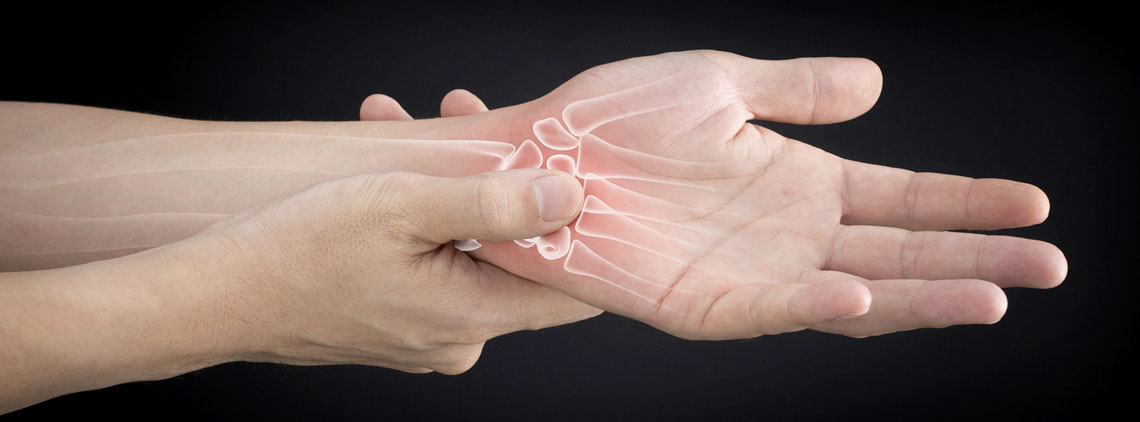
Wrist Tendonitis
What Is Wrist Tendonitis?
Wrist tendonitis, also called wrist tendinitis or tenosynovitis, is inflammation of one or more tendons in the wrist. Tendons are strong, fibrous bands of tissue that connect the muscles of the forearm to the bones of the hand. When a tendon or its surrounding sheath becomes irritated, usually from repetitive movement, it can cause pain, swelling, and stiffness that make everyday tasks like typing, lifting, or gripping uncomfortable.
Wrist tendonitis is a common condition, and in most cases it responds well to conservative, nonsurgical treatment when it's caught early. Left untreated, however, ongoing irritation can progress to a more chronic condition called tendinopathy, so it's worth addressing symptoms as soon as they appear.
Wrist Anatomy
The wrist contains numerous tendons that pass through narrow sheaths lined with synovial fluid, a lubricant that allows the tendons to glide smoothly as you move your hand and fingers. These tendons fall into two broad categories:
- Extensor tendons. Located on the back of the wrist and hand, these tendons are used when you bend your wrist backward or straighten your fingers.
- Flexor tendons. Located on the palm side of the wrist and hand, these tendons are used when you bend your wrist forward or curl your fingers.
Wrist tendonitis often develops where a tendon passes over a bony prominence, since that area experiences more friction with repeated motion.
Symptoms of Wrist Tendonitis
Symptoms typically develop gradually and may include:
- Pain along the tendon, often worse with movement or gripping
- Swelling or visible puffiness around the wrist
- Stiffness, especially first thing in the morning
- Warmth or redness over the affected area
- A grinding, creaking, or catching sensation (called crepitus) when moving the wrist or fingers
- Weakness or difficulty performing tasks like typing, lifting, or twisting a jar lid
Symptoms are usually most noticeable during activities that repeatedly flex or extend the wrist, such as opening and closing your hand or rotating your wrist side to side.
Causes and Risk Factors
Wrist tendonitis is most often caused by repetitive strain, small, repeated stresses on a tendon that eventually lead to irritation and microscopic tearing. Common contributors include:
- Repetitive wrist motions from work, such as typing, assembly line work, or using power tools
- Sports that place repeated stress on the wrist, including tennis, golf, rock climbing, and rowing
- Hobbies or activities involving repetitive gripping or twisting
- Direct injury or a sudden increase in activity level
- Poor wrist positioning or ergonomics during repetitive tasks
Certain factors can also increase your risk, including being over the age of 40, being female, having a previous tendon injury, or having a condition such as diabetes or rheumatoid arthritis.
One specific and common form of wrist tendonitis is De Quervain's Tenosynovitis, which affects the tendons on the thumb side of the wrist.
Diagnosis
During your appointment, your provider will start with a physical exam of your wrist, checking for tenderness, swelling, and range of motion. They may ask you to move your wrist or fingers in specific ways to help pinpoint which tendon is affected.
If De Quervain's tenosynovitis is suspected, your provider may perform a Finkelstein's test, in which you make a fist with your thumb tucked inside your fingers and then gently bend your wrist toward your pinky finger. Pain during this movement can help confirm the diagnosis.
In some cases, your provider may recommend an X-ray to rule out other causes of wrist pain, such as a fracture or arthritis. Ultrasound or MRI imaging is occasionally used for a more detailed look at the tendon and surrounding tissue.
Nonsurgical Treatment Options
Most cases of wrist tendonitis improve with conservative care. Depending on your symptoms, your provider may recommend one or a combination of the following:
- Splint or brace. Wearing a splint, particularly during activities that aggravate your symptoms, helps rest the tendon and reduce strain.
- Ice. Applying ice to the affected area for 10 to 20 minutes at a time can help reduce swelling and pain. Always place a cloth between the ice and your skin.
- Anti-inflammatory medication. Over-the-counter medications like ibuprofen or naproxen can help reduce inflammation and manage pain.
- Activity modification. Temporarily reducing or adjusting the movements that trigger your symptoms gives the tendon a chance to heal.
- Exercise and stretching. Once acute pain has eased, targeted exercises using light resistance and higher repetitions can help build strength around the tendon without overloading it.
- Steroid injection. For more persistent inflammation, a corticosteroid injection directly into the affected area can provide more significant, though usually temporary, relief.
Most patients see meaningful improvement within a few weeks of starting conservative treatment, though full recovery can take longer depending on the severity and how long symptoms were present before treatment began.
When to Seek Immediate Care
While wrist tendonitis is rarely an emergency, contact us right away if you experience:
- Numbness or tingling in your hand or fingers
- A sudden increase in pain or swelling
- Inability to move your wrist or fingers
- Significant swelling of the hand or wrist
Frequently Asked Questions
How long does wrist tendonitis take to heal? Mild cases often improve within two to four weeks with rest and conservative treatment. More persistent or long-standing cases can take several months of consistent care to fully resolve.
Can wrist tendonitis heal on its own? Mild irritation may settle down with rest alone, but continuing the activity that caused it without modification often leads symptoms to return or worsen. Early treatment generally leads to a faster, more complete recovery.
Is wrist tendonitis the same as carpal tunnel syndrome? No. Wrist tendonitis involves inflammation of the tendons, while carpal tunnel syndrome is caused by compression of the median nerve. The two conditions can feel similar and sometimes occur together, which is why an accurate diagnosis matters.
When is surgery needed for wrist tendonitis? Surgery is typically only considered when symptoms don't improve after an extended course of nonsurgical treatment. Most patients never need it. Learn more about our surgical options.
If you're experiencing wrist pain, swelling, or stiffness, our team at Orlando Hand Surgery Associates can help you find the right diagnosis and treatment plan. Request an appointment or call us at (407) 841-2100.